
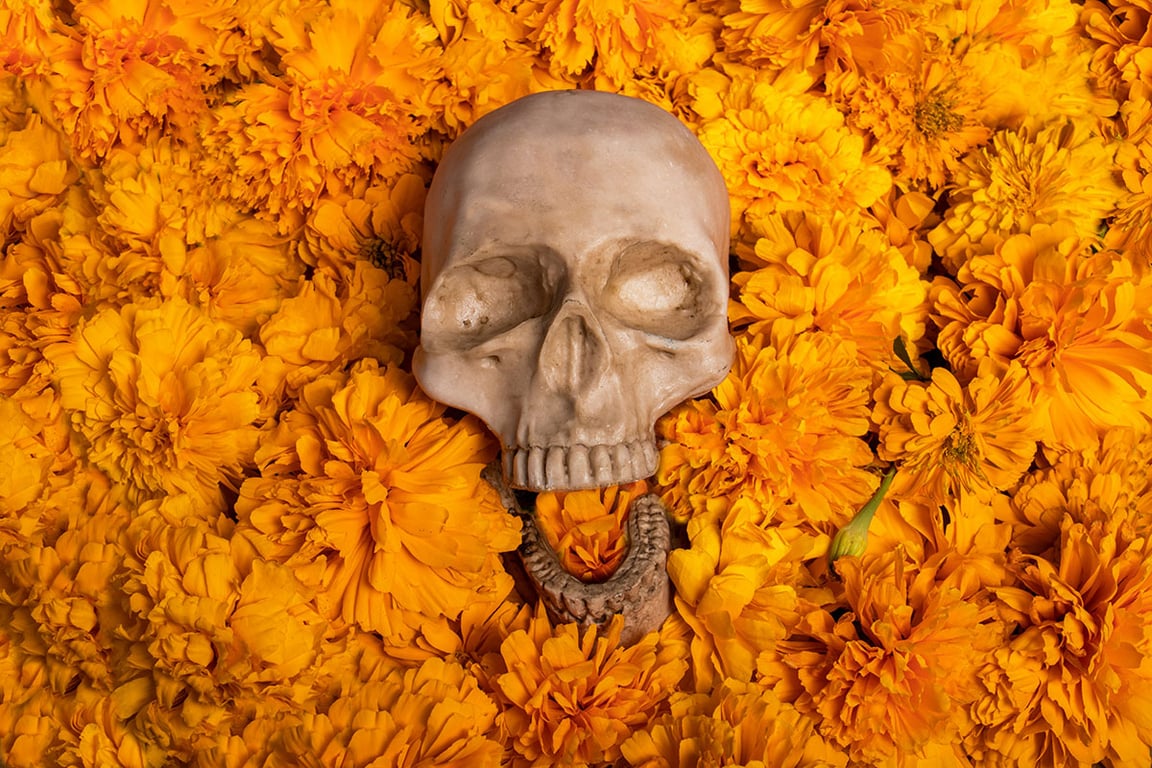
For most of human history, death was not hidden. It lived in the house.
Archaeological evidence from as early as 100,000 years ago suggests intentional burial. Bodies placed carefully. Ochre sprinkled. Tools or flowers tucked beside them. Even in the Paleolithic era, we were already telling a story: this mattered. This person mattered.
In many early societies, death was a rite of passage as structured as birth. Anthropologists often describe three stages in rites of passage across cultures: separation, liminality, and incorporation. The dying person separates from ordinary life, lingers in a threshold space, and is then incorporated into ancestorhood or collective memory. The community participates. Death was never a solo act.
Across time and geography, bodies have been returned with startling creativity and coherence. In ancient Egypt, beginning around 2600 BCE, mummification preserved the body for an afterlife imagined as continuity. In contrast, Tibetan sky burial, documented for over a thousand years, offers the body to vultures as an act of ecological reciprocity. Zoroastrian Towers of Silence, in use since at least the first millennium BCE, elevated the dead to protect the sacred elements of earth, water and fire from contamination of the decomposing body. In Madagascar, the centuries old practice of famadihana rewraps ancestral bones in ceremony and music, reaffirming kinship long after biological life has ended. Hanging coffins in parts of Southeast Asia, some dating back over 2,000 years, lift the dead toward cliff faces and sky, a vertical theology carved in wood.
Then history intervenes.
The Black Death in the 14th century overwhelmed Europe’s burial customs. Mass graves became necessity rather than ritual choice. War has done the same. During the American Civil War in the 1860s, the need to transport soldiers’ bodies home helped normalize embalming in the United States. That technological pivot seeded the modern funeral industry. Care shifted gradually from family hands to professional ones.
By the early 20th century, especially in industrialized nations, death migrated from parlor to hospital. Antibiotics, ventilators, and intensive care units saved lives and prolonged dying. The medicalization of death reframed it as a clinical failure rather than a communal transition. Bodies that were once washed by daughters and sisters were now prepared by licensed professionals behind closed doors. Grief itself became quieter, tidier, more private.
But access to a “good death” is uneven. The World Health Organization estimates that tens of millions need palliative care each year, with the vast majority living in low and middle income countries where pain relief is scarce. Within wealthy nations, race, gender, disability, and class shape who receives adequate pain control, who is believed, who is overtreated, and who is left alone. Systems of oppression do not stop at the hospital door. They follow us to the bedside.
And yet, across millennia, one truth persists. Humans gather. We sing. We wash the body. We tell stories. Whether in a cave, a cathedral, a high rise ICU, or a rural village courtyard, death keeps asking the same question: who will sit with me?
How we answer that question reveals who we are.